

GTM Engineering for Modern Revenue Teams
We build AI-powered GTM systems that eliminate manual work and accelerate revenue.
VantaOps designs and builds AI-powered GTM systems that connect your CRM, marketing, sales, customer success, and AI tools into one intelligent revenue engine. From CRM architecture and workflow automation to AI agents, lead routing, enrichment, and revenue intelligence, we help high-growth companies scale without adding operational overhead.
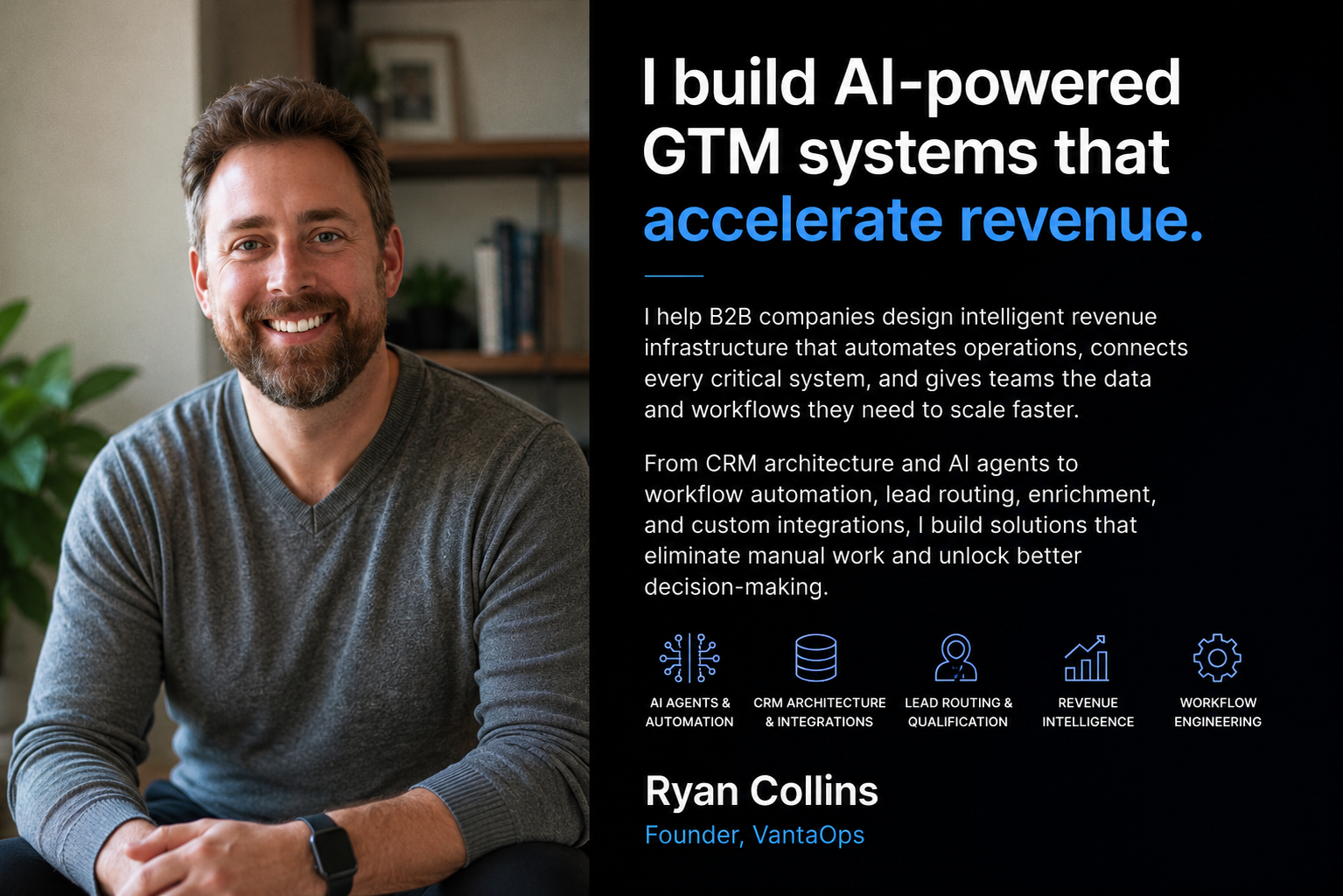
One Source of Truth
Build Once. Automate Everything.
Modern GTM teams shouldn’t spend their time cleaning CRM data, manually routing leads, or building reports. We build intelligent systems that automate repetitive work, surface actionable insights, and give revenue teams the infrastructure they need to move faster. Your RevOps team stays in control while AI handles the operational heavy lifting.
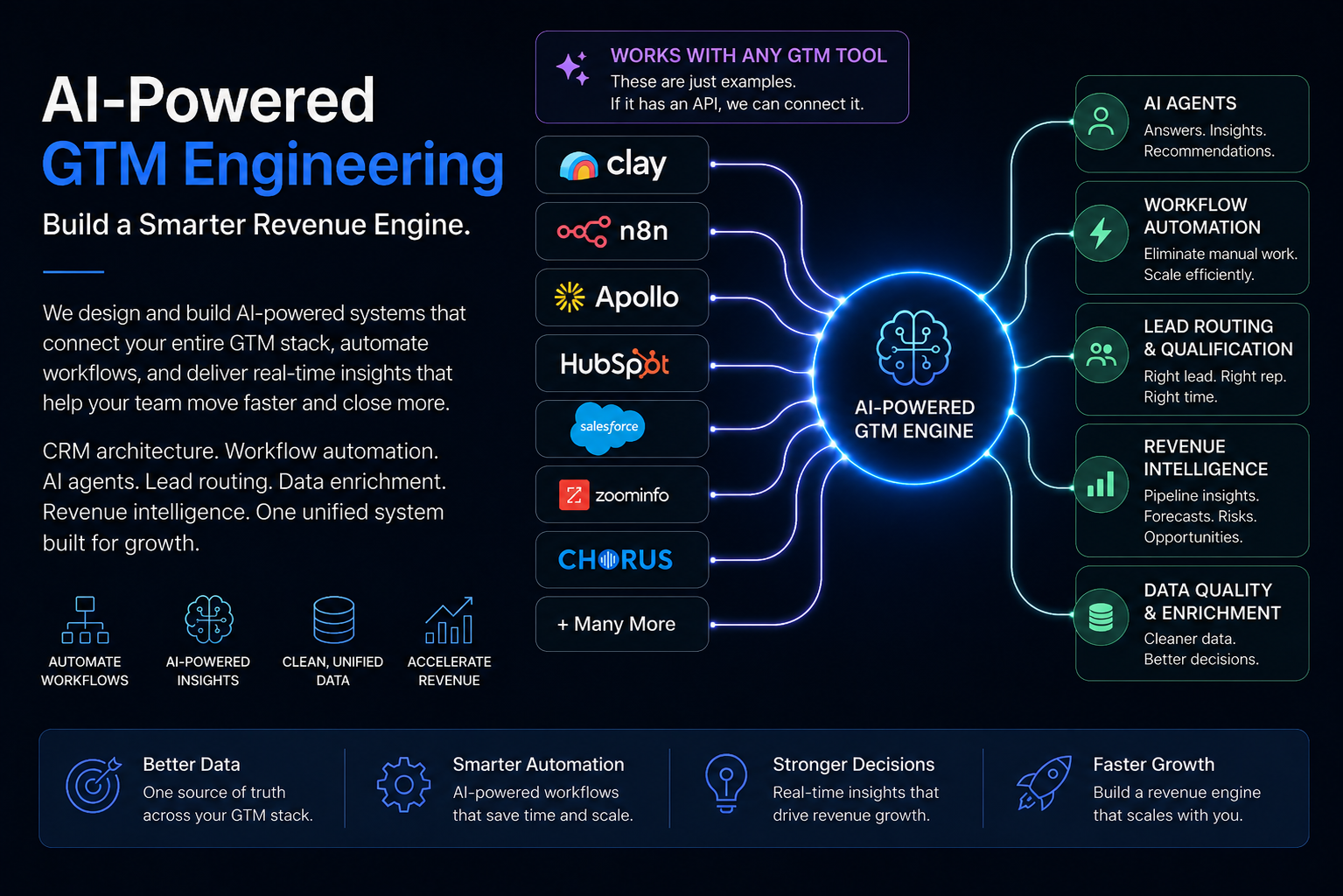
The Power of AI
We Build AI-Powered Revenue Systems
Every company has valuable GTM data spread across dozens of disconnected systems. We connect your CRM, marketing automation, sales engagement, enrichment, and AI platforms into one automated ecosystem. The result is cleaner data, faster processes, better decisions, and more predictable revenue.
Explore the Data Possibilities:

Revenue Intelligence
- Which opportunities are most likely to close?
- Which deals are stalled?
- Why is pipeline increasing or decreasing?
- Which reps need coaching?
- What will next quarter’s pipeline look like?
CRM Health & Data Quality
- Detect duplicate records automatically
- Find missing contacts and buying committee gaps
- Audit lifecycle stages
- Monitor CRM health continuously
- Identify broken workflows before they impact revenue


AI-Powered Lead Management
- Automatically qualify inbound leads
- AI-powered lead scoring
- Intelligent lead routing
- Territory assignment
- Instant sales notifications
AI Sales Insights
- Which accounts show buying intent?
- Which prospects should reps contact today?
- Which opportunities need executive attention?
- Which customers are ready for expansion?


Marketing Performance
- Which campaigns create pipeline?
- Which channels drive revenue?
- Which personas convert fastest?
- Which campaigns deserve additional budget?
Revenue Operations Analytics
- Funnel conversion rates
- Pipeline velocity
- Sales cycle analysis
- Forecast accuracy
- Pipeline bottlenecks

Frequently Asked Questions
Got Questions? We’ve Got Answers.
What is GTM Engineering?
GTM Engineering combines Revenue Operations, software engineering, automation, and AI to build scalable systems that help marketing, sales, and customer success teams operate more efficiently. Instead of manually managing processes, GTM Engineers design intelligent workflows that automate repetitive work and improve the entire revenue engine.
How is GTM Engineering different from RevOps?
Traditional RevOps focuses on reporting, CRM administration, forecasting, and process management. GTM Engineering goes a step further by building AI-powered automations, integrations, custom workflows, APIs, and intelligent systems that eliminate manual work and allow revenue teams to scale without adding headcount.
Which CRMs do you support?
We primarily work with HubSpot and Salesforce, but we also integrate with a wide range of GTM platforms including Marketo, Outreach, Salesloft, Clay, Apollo, Gong, Slack, Shopify, Stripe, and many others. If your platform has an API, we can likely integrate it.
Which AI platforms do you integrate?
Absolutely. We design AI agents tailored to your business that can answer questions about your pipeline, qualify inbound leads, summarize customer interactions, monitor CRM health, automate internal workflows, and much more. Every solution is built around your existing processes and data.
How long does implementation take?
Most projects are completed in 2–6 weeks, depending on complexity. Smaller workflow automations can often be delivered in just a few days, while larger GTM transformations involving multiple systems and AI agents may take longer. We work in iterative phases so you start seeing value quickly.
Do you work with our existing RevOps team?
Yes. Our goal is to augment your RevOps team, not replace it. We handle the engineering, automation, AI implementation, and systems integration while your RevOps team continues to own strategy, governance, and day-to-day operations. Together, we help your revenue organization move faster.
Can you integrate custom APIs and internal systems?
Yes. We regularly build custom integrations between CRMs, marketing platforms, internal databases, proprietary applications, and third-party APIs. Whether you’re connecting cloud software or internal business systems, we can create secure, scalable integrations that fit into your existing GTM architecture.
Gap
Gap
Pricing
The time your team saves answering critical GTM questions—plus the revenue recovered from better-qualified leads and faster decisions—means this project pays for itself in a single quarter.
Flexible Engagements for Every Stage of Growth
Whether you need a one-time GTM assessment, a custom AI implementation, or ongoing GTM Engineering support, we’ll tailor an engagement around your revenue goals.